One of the most common questions I hear from security dealers is: “How much should remote video monitoring cost?” And while it’s a great question, the answer is rarely simple. Proactive video monitoring isn’t a one-size-fits-all service.
Countless variables impact the operational cost, response time, and effort the monitoring center requires—especially for services that rely on human discretion and situational awareness.I wrote this to serve as a practical framework—a 90% rule—to help security providers and monitoring centers better define the service tiers and begin structuring fair, scalable pricing models.
Introduction
Security challenges evolve across industries, making the need for effective video monitoring greater than ever. To protect assets, prevent unauthorized access, and respond quickly to security events, you must choose the right monitoring service. This choice meets operational goals and customer expectations.However, video monitoring is not a single solution.
By understanding the distinctions between service types and use cases, security companies can align service offerings with customer needs and establish appropriate recurring revenue models. This guide outlines three primary video monitoring tiers: Video Alarm Monitoring, Video Surveillance Monitoring, and Remote Video Guarding. We developed each tier for different objectives and levels of operator involvement.
This guide outlines three primary tiers of video monitoring: Video Alarm Monitoring, Video Surveillance Monitoring, and Remote Video Guarding—each tailored to different objectives and levels of operator involvement. We developed each tier for different objectives and levels of operator involvement.
The Importance of Selecting the Right Video Monitoring Service
When you are about to evaluate video monitoring solutions, the key questions to ask include:
- What is the primary security objective?
- How much human intervention or discretion is required?
- What are the physical characteristics of the site?
- Is there an expectation of after-hours human activity?
- What is the budget for monitoring services?
So, how do you select the right video monitoring service for your customers? We break it down into tiers of service. Each tier of service brings a unique operational scope, level of discretion, and pricing model. Understanding these distinctions helps service providers establish SOPs for monitoring centers, create meaningful expectations with clients, and predict monthly operational costs.
Tier 1: Video Alarm Monitoring
Video Alarm Monitoring is the most basic and often the most cost-effective form of video monitoring. It is designed for fast, event-driven responses where no human discretion is needed. When a video zone is triggered, the central station operator reviews the associated video clip. If a person is visible, the operator treats it as a verified event and initiates a response.
This process is simple and relies on clear parameters: The operator treats a person detected in a secured zone—whether interior or fenced exterior—as a security breach.
Consequently, this model works best in environments where providers expect no human activity during monitored hours. Typical applications include interior retail or office spaces, warehouses, fenced storage yards, and areas monitored by panic or duress systems. Since the operator’s task is limited to verification, and there is no requirement for extended observation or discretionary judgment, costs remain low and are generally billed per event. However, if alarm activity is excessive, overage fees may apply.
The key benefit is rapid verification and response with minimal monitoring expense. That said, this service isn’t suited for environments where occasional authorized after-hours presence occurs or where clients need behavioral analysis. For those cases, a more advanced tier is required.
Simple, Fast, and Cost-Effective
This is the entry-level service. When a video analytics zone is triggered, an operator quickly reviews the video. If a person is visible, it’s treated as a verified event, and a response is initiated.
Best for:
- Interior secured areas (offices, retail, storage).
- Outdoor fenced yards with no authorized access.
- Panic button or duress alert monitoring.
Cost Structure:
- Usually event-based.
- Minimal operator time = low cost, unless volume is excessive.
Key Benefits:
- Fast and consistent verification.
- Low monthly fees.
- Clear black-and-white SOP (person = threat).
Limitations:
- No discretion, no context.
- Not suited for sites where after-hours activity may be authorized.
Tier 2: Video Surveillance Monitoring
This tier provides a balance between automation and operator involvement. In Video Surveillance Monitoring, the operator reviews triggered events and applies discretion—deciding whether the activity warrants a response based on behavior and context. This approach is ideal for sites where occasional after-hours activity is expected, such as storefronts, service areas, or properties in urban environments.
Rather than dispatching every time the system detects a person, the operator assesses their behavior.If it’s suspicious or clearly criminal, a response is initiated. Otherwise, the event is documented, and no further action is taken. To support this discretion, monitoring centers must define clear SOPs and must train operators accordingly.
This service is typically priced as a flat monthly rate per site, with a predefined number of handled events included. For enhanced effectiveness, we recommend enabling two-way audio communication, allowing operators to engage individuals on-site and reduce escalation.
The benefits of this service include a reduction in false alarms and the ability to proactively assess threats. However, the reliance on human judgment introduces the potential for inconsistent decisions, especially in cases where activity is ambiguous or context is unclear. Still, this tier offers a valuable middle ground for clients needing flexible monitoring without the cost of live observation.
Discretion-Based Observation
In this tier, operators are expected to assess behavior. If a person or vehicle is seen, they decide whether the activity appears suspicious or authorized before escalating.
Best for:
- Storefronts, restaurants, or light commercial sites.
- Equipment yards or banks with occasional after-hours activity.
- Sites with low but possible human presence.
Cost Structure:
- Typically priced per site, with an included number of monthly handled events.
- More operator training and judgment required.
Key Benefits:
- Reduced false alarms.
- Two-way audio communication can de-escalate issues.
- More proactive threat identification.
Limitations:
- Requires clear SOPs.
- Judgment introduces some variability and training needs.
Tier 3: Remote Video Guarding
Remote Video Guarding represents the highest level of video monitoring, designed for environments where ongoing observation is necessary. Operators actively watch live video streams following a triggered event, often across multiple cameras, and maintain observation until the situation resolves.
This service best suits car dealerships, logistics yards, distribution centers, or high-value properties where after-hours activity is common and requires thorough review. Operators follow detailed service agreements that define when to initiate dispatch, how to engage with audio, and what actions to take depending on the situation.Operators must observe live until the area is clear, not just review a single event clip. The use of two-way audio is critical here—not just for verification but also for deterrence and communication.
Providers design this tier to identify specific behaviors or patterns defined in the service agreement, not to verify every human activity.Due to the extended operator time, this service has the highest cost. Pricing models will vary — some are time-based, others per camera — but the defining factor is the significant operator involvement required to deliver the service effectively.
While it costs more, Remote Video Guarding provides unmatched protection, tailored protocols, and proactive deterrence. Clients who select this tier must understand the value of live engagement and must prepare to work closely with their monitoring partner to fine-tune expectations.
Live, Active, Custom Monitoring
This top-tier service allows operators to remain live on camera during active events, observe multiple angles, and take ongoing action until the situation resolves.
Best for:
- Vehicle lots, logistics hubs, and high-theft zones.
- Sites with regular nighttime access that need constant oversight.
- Government, infrastructure, or high-value environments.
Cost Structure:
- Highest of all tiers.
- Typically time-based or camera-based pricing depending on service level.
Key Benefits:
- Live deterrence and proactive action.
- Custom SOPs per client/site.
- Tailored communication protocols.
Limitations:
- High cost due to operator time.
- Requires a defined service agreement outlining what constitutes a dispatchable event.
Key Factors to Consider to Match the Right Tier to the Right Site
To properly align service levels with customer needs, it’s important to:
- Understand the site layout and risk profile—interior secure areas vs. outdoor open zones.
- Identify whether any human presence is expected after hours.
- Ensure technology like AI filtering or audio talk-down is in place to support the operator’s role.
- Collaborate with your monitoring partner to establish clear SOPs based on the tier selected.
To structure your price, you should also consider:
- Secure area type: Interior vs fenced exterior vs open lot.
- Expected after-hours access: Always unauthorized or occasionally allowed?
- Technology tools available: Audio talk-down, AI detection, camera layout
- Client expectations: Is “monitoring” simply verification, or active engagement?
Takeaway
In summary, you can’t slap a flat price on remote video monitoring—but you can build a framework that aligns to your customer needs, operator actions, and billing structures.
As you begin to define service tiers and site profiles up front, you’ll:
- Improve pricing transparency
- Enhance operator performance
- Build better client relationships
- Protect your margins
If you’re a dealer or central station leader that wants to refine your approach—or just want to talk shop—I’m always happy to share what we’ve learned.
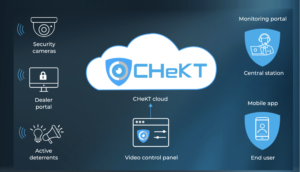
Before selecting the right video monitoring service for your customers, take a look at how monitoring operators take advantage of CHeKT Proactive Visual Security.
Conclusion
Remember this: remote video monitoring costs aren’t just about how many cameras are deployed—they’re about how much operator time and decision-making is required. Define the appropriate tier of service—Video Alarm Monitoring, Video Surveillance Monitoring, or Remote Video Guarding—you want to give your customers to ensure they get the protection they need. Then, you should set clear expectations, and build a pricing model that reflects the true value of your offering.
Use this framework as a starting point. While it won’t cover every scenario, but it will help structure conversations, standardize service offerings, and align your security solutions with operational realities.
If you’re a dealer, integrator, or monitoring partner and you’d like to explore how to implement these tiers or structure your pricing, I’m happy to connect.