Solar farm security works when someone confirms what a camera detected and acts fast. Fences delay. Cameras record. But the loss happens in the gap between the first alert and the first response.
That gap is expensive. In Fresno County, California, thieves took roughly $100,000 in copper wire from a utility-scale solar site. They left damage the sheriff’s office put at up to $2.8 million. So the site shut down and faced months of repairs.
So this guide covers four things. What thieves take. The layers of solar farm security. The sequence after an alert. And what to ask a provider.
Why Solar Farm Security Is Hard: What Thieves Actually Take
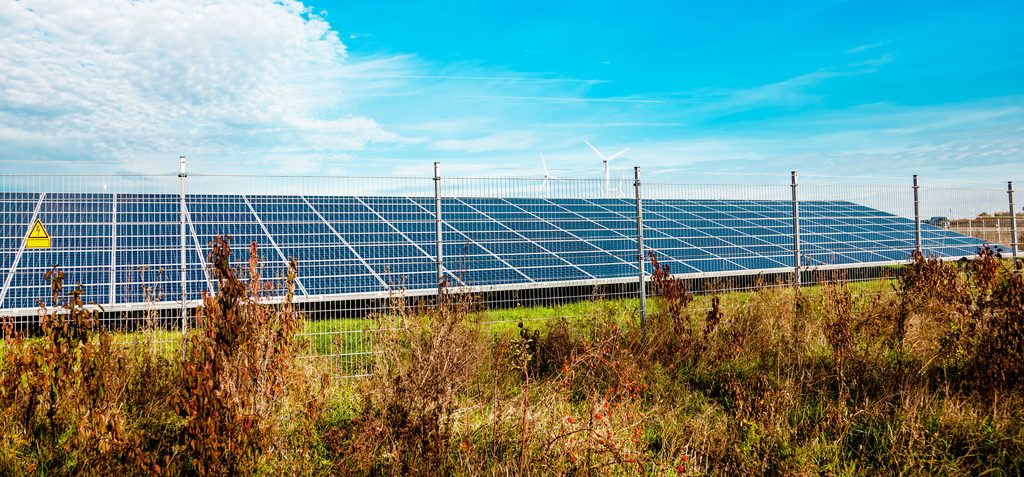
Solar farms are hard to secure because they are large, remote, unstaffed after dark, and full of copper — and because what gets taken costs far less than the outage it causes.
Recent U.S. cases show the pattern. In Nash County, North Carolina, investigators allege a man cut the outer fencing at two solar farms and took about 2,000 feet of copper wire and 40 connectors, with losses near $11,000. In Johnston County, someone cut a hole in a chain-link fence and took roughly $8,800 in copper.
Both have the same shape: the fence was the only barrier, and in Johnston County cameras identified a suspect only after the wire was gone. Solar panel theft gets the headlines, but modules are heavy, serialized, and slow to move. Copper is none of those things.
Copper, inverters, and solar panel theft and the outage they can produce
DC string cabling, inverters, combiner boxes, and transformers are what a site needs to export power. Stripping the cabling halts production whether or not anything else is touched. Fresno is the clearest example: about $100,000 of copper, up to $2.8 million in damage, generation at zero.
We found no sourced figure for average U.S. solar downtime cost per day, so this article does not estimate one. Your PPA rate, capacity, and deductible say more than an industry average.
Why the construction phase is its own risk window
Fencing may be incomplete, cable sits staged in reels, and crews come and go. In Laurel, Delaware, state police charged an employee of the construction company with taking nearly 2,000 feet of copper worth more than $26,000 over four days in June 2026.
Vendors commonly call construction the highest-exposure period; we found no independent data establishing that, so treat it as a window needing its own plan. CHeKT’s construction site theft statistics page covers the broader jobsite picture.
Why Fences and Passive Cameras Leave a Response Gap
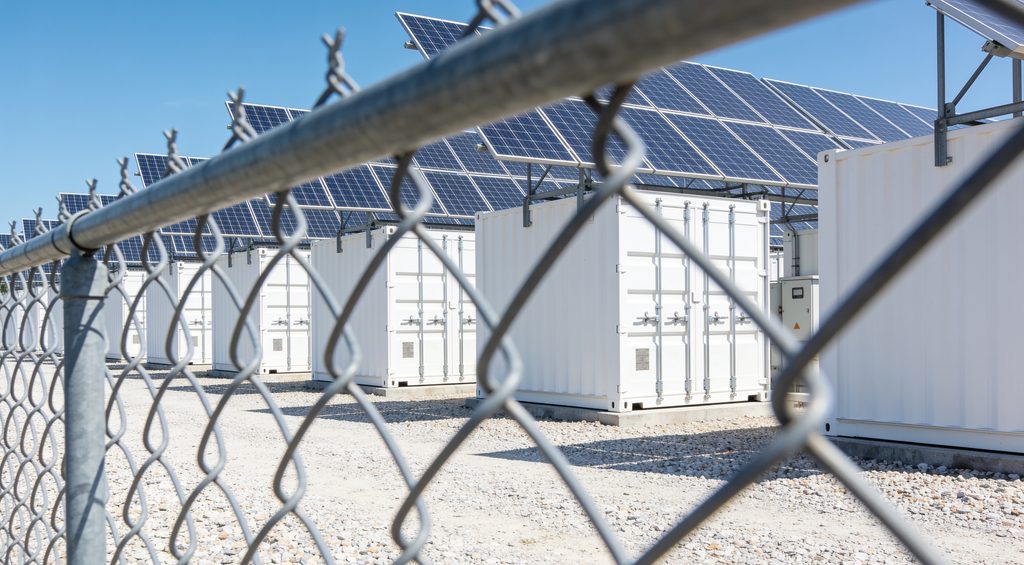
A fence delays, and a camera nobody watches records. Neither tells anyone in time whether movement at the fence line is a contractor, a deer, or a crew with bolt cutters.
A perimeter fence buys minutes, and every site should have one. But it does not report, and both North Carolina cases began with fencing that was simply cut.
Recorded footage helps afterward, supporting the claim and sometimes identifying the suspect, as in Johnston County. It does not change what happened that night.
Unverified alarms are the deeper problem. The U.S. Department of Justice’s COPS Office guide False Burglar Alarms found that between 94 and 98 percent of police alarm calls are false, higher in some jurisdictions. That research is dated and covers burglar alarms broadly rather than solar sites, but the operational consequence stands: agencies triage unverified alarms, and at a remote site generating activations from wildlife and weather, an unverified signal carries little urgency. Remote video monitoring closes that gap only if someone is actually looking, as CHeKT’s industrial perimeter security guide covers for other infrastructure.
Layers of Solar Farm Security Systems
Solar farm security systems work as layers, each with a job and a limit. The useful question for every layer is what it does at 2 a.m. with nobody on site.
Perimeter and access control
Fencing, gates, and lighting define the boundary and slow entry. Solar farm fencing delays an intruder and establishes trespass, but cannot tell you it has been cut — and at a several-hundred-acre site nobody is standing at the breach point.
Detection: thermal cameras, PTZ, analytics, and perimeter intrusion detection
A perimeter intrusion detection system, or PIDS, is a sensor layer on the boundary itself — fence-mounted vibration sensors, buried cable, photoelectric beams, or radar — signaling when the line is crossed.
Thermal security cameras read heat rather than visible light, so they work in darkness, fog, and dust. PTZ cameras let an operator follow and zoom once something is flagged. AI analytics narrow alerts to people and vehicles, separating a usable system from one that pages someone every time a rabbit crosses a row. CHeKT’s AI Server runs that layer on existing cameras.
Traditionally, the main limitation is that each device here produces alerts, and none of them can decide if the alert is real.
Monitoring and verification
Monitoring and verification is where solar farm security cameras stop recording and start responding — the subject of the next section.
On-site response: guards, patrols, and law enforcement
Guards work when present. At a remote site they usually are not: a patrol visits on a schedule, so coverage between visits is zero, and law enforcement may be a long drive out. Remote monitoring can reduce guard hours, but by how much depends on the site — ask any provider quoting a fixed percentage where it came from.
Solar-Powered Security Cameras vs. Security Cameras for Solar Farms
These are two different things. “Solar-powered” describes how a camera gets electricity; “solar farm security” describes what is protected. They overlap at remote sites with no grid tie and no network.
Most results for solar security cameras are consumer products built for a driveway or barn — a different category from a commercial deployment.
What matters on your site is power as a design input. Panel output, battery autonomy through overcast winter days, and actual equipment load decide whether a camera is online at 3 a.m. in January. Thermal sensors, IR illuminators, heaters, and radios each add load, so size the system against manufacturer specification sheets and local solar resource data.
Uplink is the other half. Solar powered cellular security cameras depend on carrier coverage at the panel location, not at the gate, and live verification needs enough upstream bandwidth to deliver a usable stream the moment an alert fires. Fiber, microwave, and cellular all work; the one that fails quietly is the one nobody tested in bad weather. CHeKT is the verification and control layer in that design, integrating with professional cameras you or your integrator select.
What Happens Between the Alert and the Response: Detect, Verify, Deter, Respond
Detection starts the clock. Verification and deterrence decide the outcome. Here is the solar farm monitoring sequence for an unstaffed site after hours.
1. Detect
A detection zone — a defined area where activity should trigger an alert — flags a person or vehicle inside the fence line, at the inverter pad, or on an access road. A PIDS sensor or thermal camera triggers the same event. Detection is the trigger, not the verdict.
2. Verify
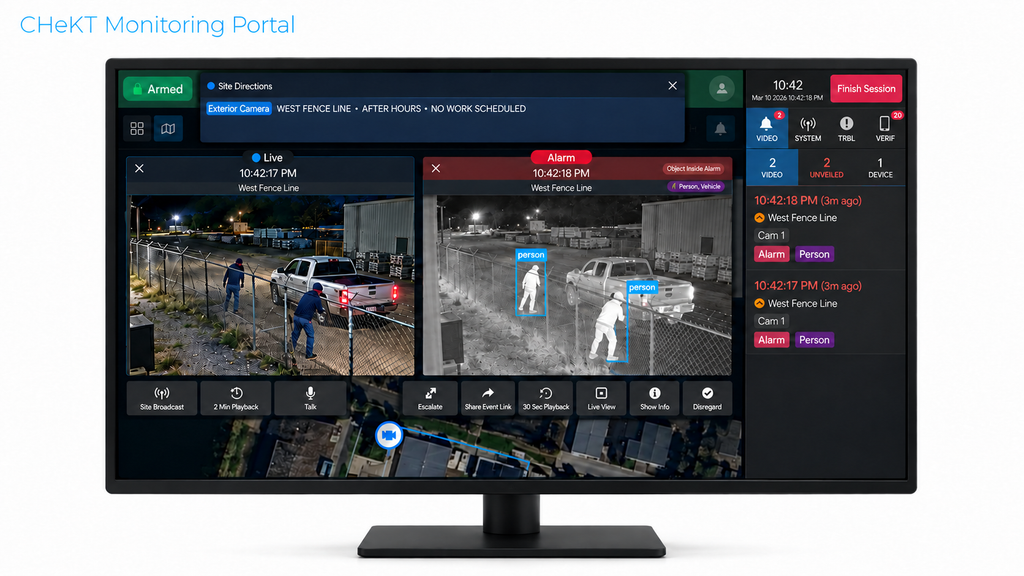
A live agent at a monitoring center opens the feed and looks: an intruder, a deer, a branch in the wind, or a contractor back for a tool.
AI detection is not verification. An algorithm classifies pixels; a trained person confirms what is happening and owns what follows. That turns an alert into a verified event rather than another false alarm.
3. Deter
The agent speaks to the person on site through live audio deterrence, or talkdown — a direct announcement over IP speakers naming what they are doing and where they are standing.
Timing is the point. Someone who has cut the fence but not reached the conductors can still leave without causing a loss. Once the cable is cut, the outage exists whether or not anyone is caught.
4. Respond
A verified alert reaches law enforcement or the site responder with live video and context: how many people, what they are driving, which way they went. That is a different call than an unverified sensor trip, and CHeKT has documented cases where live video led to apprehension.
Worked scenario
A thermal camera flags movement on the west fence line after hours. An agent opens the feed, sees two people and a vehicle backed to the fence, and confirms no work is scheduled. Audio goes out naming the location and the vehicle and law enforcement gets a verified report with video rather than an alarm code.
Securing the Camera Network Itself: Cybersecurity and Compliance
A security system that can be hijacked, or that stores footage carelessly, adds risk instead of removing it. Cameras at an unstaffed site are networked infrastructure devices and deserve the same scrutiny as any other connected equipment. Two things matter most: remote access should be controlled, authenticated, and auditable rather than a port left open for convenience — see securing remote access to the camera system — and retained footage should be encrypted and access-controlled, the role of encrypted video retention
Where This Applies: Utility-Scale Sites, the Construction Phase, and Multi-Site Portfolios
The pattern repeats wherever valuable equipment sits unattended behind a fence. CHeKT’s proactive visual security for critical infrastructure work addresses the same conditions: large perimeters, no overnight staff, long responder distances.
During construction, mobile surveillance trailers cover temporary perimeters before permanent infrastructure exists — the approach behind stopping construction site theft.
The nearest published CHeKT analog is water infrastructure, not solar. A water authority protecting unattended towers had fenced, unstaffed towers and pump stations with no electronic security, recurring trespass, vandalism, and diesel theft. Photoelectric beams paired with cameras on a CHeKT Video Control Panel sent live-video alarms to a monitoring center. An earlier breach had forced the authority to divert the tower, drain it, and sterilize it — a minor intrusion with an operational consequence far out of proportion. That is the solar problem in a different utility.
For security leaders running a portfolio, the goal is one standard across every site.
What to Look for in a Solar Farm Security System
Put these questions to any provider to see how good their security system actually is:
- How are alerts verified — by a person, or by AI alone? While AI can act as a force multiplier for security, it’s not a complete replacement for a human in the loop.
- After verification, who is notified, and what is the documented procedure?
- Is detection designed for this site’s wildlife and weather?
- Does the power and uplink design hold at the weakest site, including winter sun and a dropped cellular connection?
- Can the system deter with live audio, or only record?
- How is footage retained, encrypted, and accessed remotely?
- Does it work with the ONVIF cameras already installed, and manage every site from one dashboard?
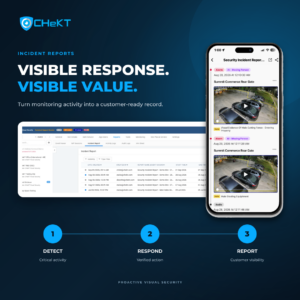
- What incident reporting does it produce for asset owners and insurers?
CHeKT’s guide to selecting a video monitoring service goes deeper. Find a CHeKT provider near you to walk a site.